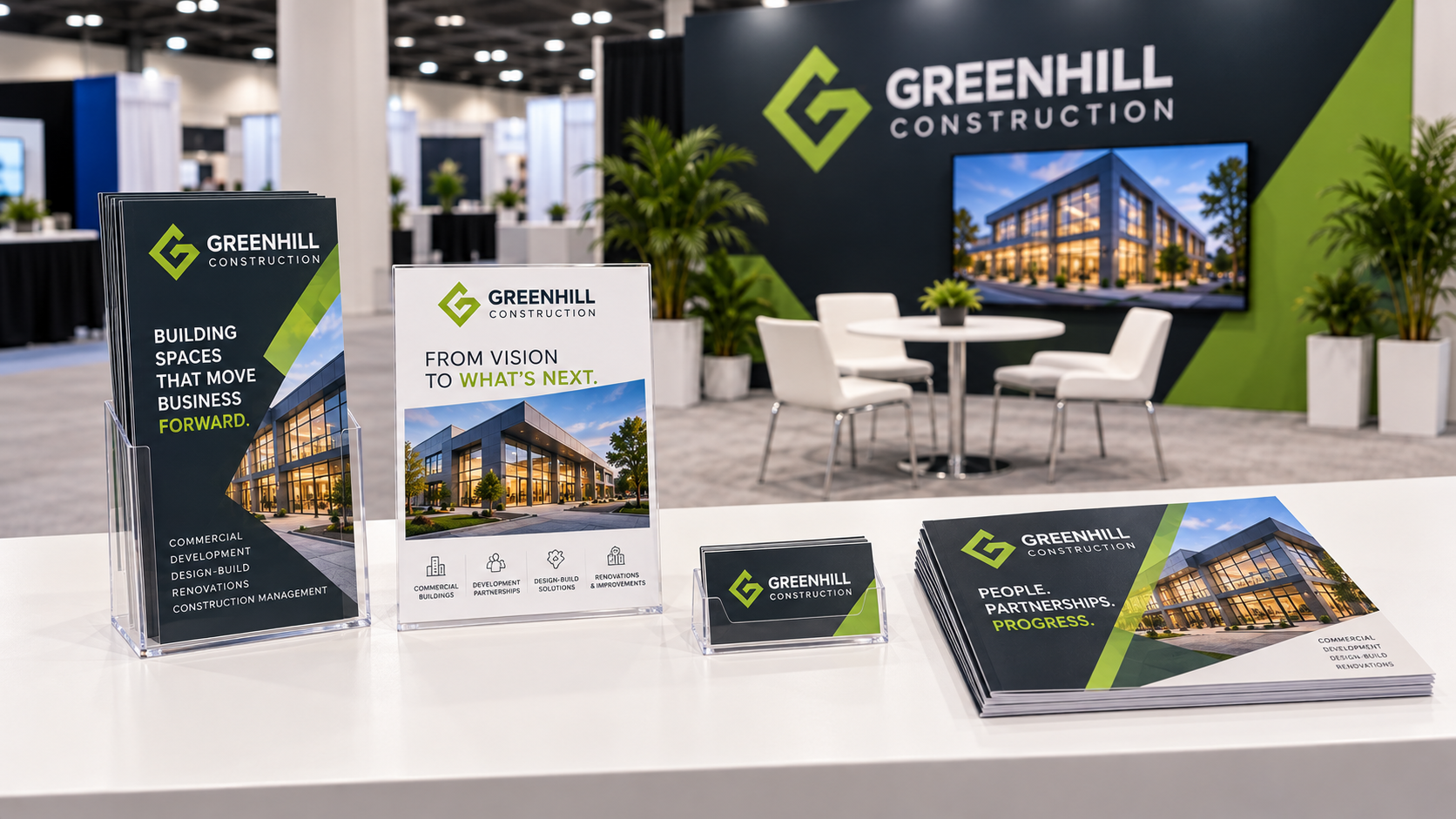
Trade shows move fast, and when your print materials miss the mark, opportunities can slip by just as quickly. From last-minute banner fixes to unclear messaging, small oversights can undercut big investments. Now is a smart time to look ahead at the trade shows, conferences and other events already on your calendar for the new year. A little advance planning now can help you start the year organized and prepared.
Use this no-stress trade show print checklist to stay organized and make every interaction count.
1. Set a Goal for Every Printed Piece
Before ordering anything, determine what each item needs to accomplish. Is a brochure introducing your services? Is a postcard encouraging attendees to schedule a consultation? Is a sign directing visitors to a demonstration? Giving every piece a purpose helps keep your messaging focused.
2. Start Production Early
Allow plenty of time for design, proofing, printing and delivery. Starting early gives you an opportunity to catch errors, make revisions and ensure everything arrives before the event without unnecessary last-minute pressure.
3. Make Sure Files Are Print-Ready
Check image resolution, dimensions, bleeds and other production requirements before submitting artwork. Brand colors, logos, fonts and messaging should also remain consistent across your trade show displays, signage and printed materials.
4. Keep Booth Signage Simple
Trade show visitors may only have seconds to notice your booth. Use a concise headline, strong visual and clear message that can be understood quickly. Avoid squeezing too much information onto banners and displays.
5. Design for Distance and Traffic Flow
Consider how your booth will look from the aisle, not just from inside the space. Position important messages and branding where they can be easily seen, while keeping entrances open and inviting.
6. Choose Handouts Strategically
Think quality over quantity. Brochures, sell sheets, postcards and business cards should reinforce the conversations your team is having. A QR code can also provide a convenient way for attendees to access additional information digitally.
7. Make Promotional Products Purposeful
If promotional products are part of your event strategy, choose items that make sense for your audience and brand. Consider how they will be distributed and whether they complement your overall event marketing goals.
8. Have a Lead-Capture Plan
Decide before the event how your team will collect contact information and document important details from conversations. A consistent approach can make post-show outreach easier and more relevant.
9. Prepare Follow-Up Materials in Advance
The work doesn’t end when the trade show does. Prepare emails, direct mail pieces or other follow-up materials before the event so your team can reconnect with prospects while conversations are still fresh.
Plan Now, Stress Less Later
Successful trade show marketing starts well before the doors open. By planning ahead for the new year, you can enter your next event with clear goals, coordinated print materials, effective booth signage and a strong follow-up strategy. The result is a professional, cohesive presence designed to attract attention, support meaningful conversations and turn trade show connections into new opportunities.